.jpg)
Oneʻuli Beach facts and facilities
Sources and review dates- Managed by
- Hawaiʻi DLNR, Division of State Parks. DLNR lists Oneʻuli on the same hours table as Big Beach.
- Hours
- 5:00am to 7:00pm daily. 5:00am to 7:45pm in May, June and July.
- Entrance fee
- $5.00 per person for non-residents. Free for Hawaiʻi residents with a state ID, and for children 3 and under.
- Parking fee
- $10 per vehicle for non-resident non-commercial vehicles. Free for residents with a Hawaiʻi driver's license or state ID.
- Parking
- DLNR does not describe a parking area for Oneʻuli.
- Lifeguard
- No tower. County of Maui Ocean Safety records lifeguard towers on the Mākena coast only at Mākena State Park.
- Restrooms
- None. DLNR states the park has no permanent restrooms.
- Showers
- None. DLNR states the park has no showers.
- Drinking water
- None. DLNR states there is no drinking water available in the park.
- Shore and entry
- Dark volcanic sand. DLNR's own hours table names it Oneuli (Black Sand) Beach.
- Known hazards
- No lifeguard tower. DLNR's shore-break caution applies to this coast.
- Snorkeling
- Not among the activities DLNR lists for this park.
Coordinates 20.6424° N, 156.4461° W. Midpoint of the shoreline the state health department registers as Oneuli Beach. Open on a map
Where the dark sand comes from
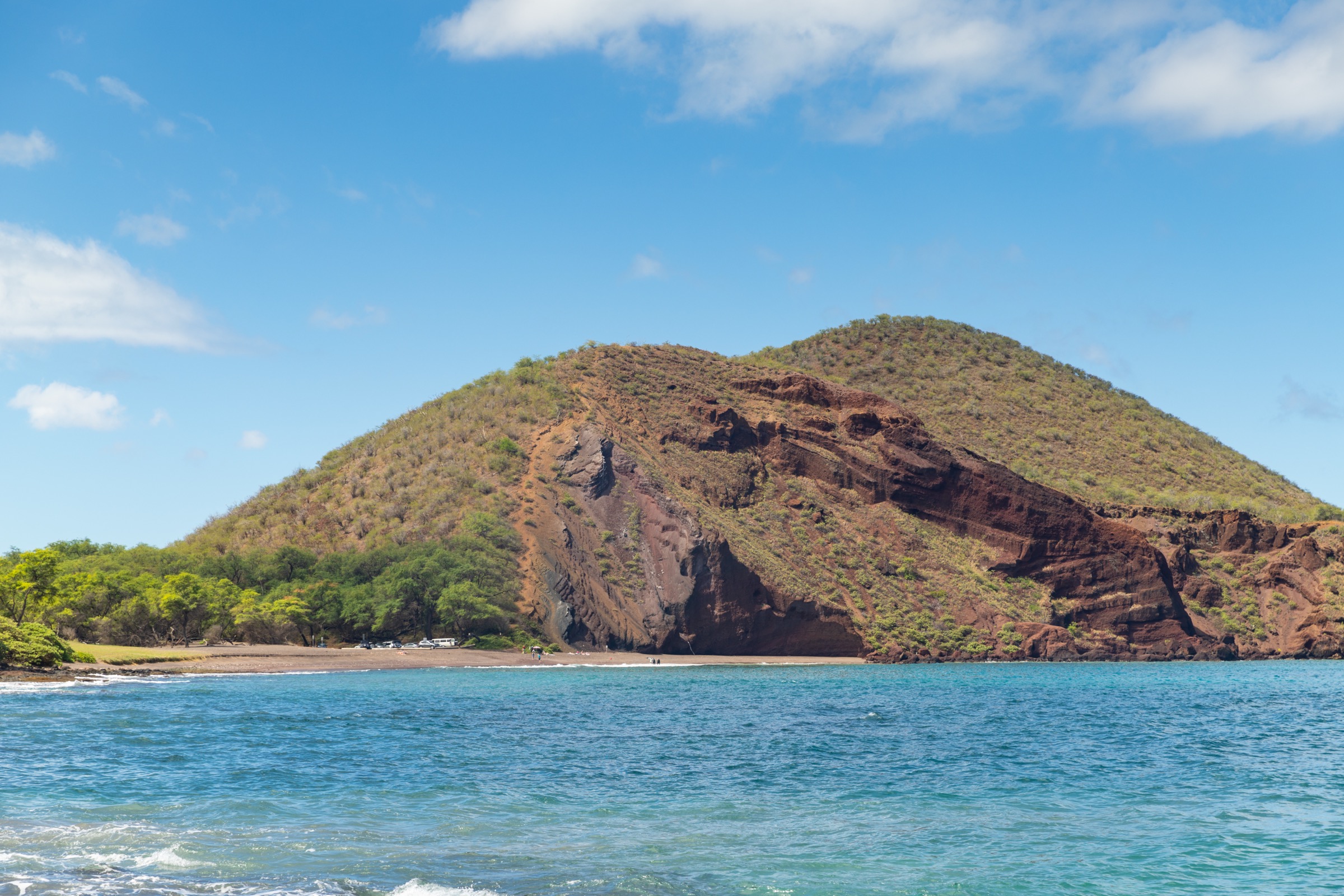
Puʻu Olaʻi is a cinder cone, and the USGS geologic map of Hawaiʻi dates it to somewhere between 13,000 and 30,000 years old, mapped as part of the Hāna Volcanics. Oneʻuli sits on its northern flank, and the beach is largely what the cone has shed and the surf has ground down.
Do not expect the jet black of a fresh Big Island beach. Eroded cinder mixed with coral and shell reads charcoal, brown, or salt-and-pepper depending on the light, how wet it is, and what the last swell moved around. It's a genuinely unusual beach for South Maui, which is mostly white sand, and it's still not a picture-postcard black.
Getting in, and what DLNR does not tell you
DLNR lists Oneʻuli's hours and includes it in the park, but its page doesn't describe a parking area or an access road for this beach. We're not going to invent one. The commonly repeated claim that the final approach is unpaved appears only in travel write-ups, so treat it as unconfirmed and look at the road before you commit a rental car to it.
There's no lifeguard tower here, no restroom, and no water, the same as everywhere else in this park.
The water is a different proposition to Big Beach
Big Beach is a steep open sand face. Oneʻuli sits tucked behind the cinder cone, and there is rock and reef in the nearshore water rather than a clean sand bottom. That changes what you're dealing with: less of the collapsing shore break that injures people a mile south, more submerged hazard to misjudge on entry and exit.
DLNR does not list snorkeling among the activities for this park, and there is no lifeguard here, so nobody is watching. The state health department does register this shoreline as a monitored beach, which means it appears in Clean Water Branch advisories after heavy rain along with the rest of the South Maui coast.
What it is actually good for
This is the quiet end of the park. The absence of a described parking area is most of the reason, and it means Oneʻuli rewards people who don't need a facility. Shade is limited to what the cone throws in the late afternoon, and there is nowhere to fill a bottle, so bring water in with you and plan to carry everything out.
The dark sand gets hot in a way white sand does not. If you are walking a dog-leg of beach barefoot in the middle of the day, that is worth knowing before you leave your shoes in the car.
Questions people ask
Is Oneʻuli a black sand beach?
It's a dark volcanic-sand beach, and DLNR's hours table does call it Oneuli (Black Sand) Beach. In person the sand often reads charcoal or salt-and-pepper rather than true black.
What are Oneʻuli Beach's hours?
The same as Big Beach: 5:00am to 7:00pm daily, and until 7:45pm in May, June and July.
Do you need four-wheel drive for Oneʻuli Beach?
We can't tell you. DLNR doesn't describe the access road, and the claim that it's unpaved comes only from travel sources. Inspect the approach yourself.
Is Oneʻuli part of Mākena State Park?
Yes. DLNR lists it on the park's hours table alongside Oneloa, so park fees and rules apply.
Sources for this page
- Hawaiʻi DLNR, Division of State Parks: Mākena State Park
- Hawaiʻi DLNR, Division of State Parks: important park notices
- USGS Open-File Report 2007-1089: geologic map of the State of Hawaiʻi
This site is independent of Hawaiʻi DLNR, the County of Maui and emergency services.