.jpg)
Mākena Beach facts and facilities
Sources and review dates- Managed by
- Hawaiʻi DLNR, Division of State Parks.
- Hours
- 5:00am to 7:00pm daily. 5:00am to 7:45pm in May, June and July.
- Entrance fee
- $5.00 per person for non-residents. Free for Hawaiʻi residents with a state ID, and for children 3 and under.
- Parking fee
- $10 per vehicle for non-resident non-commercial vehicles. Free for residents with a Hawaiʻi driver's license or state ID.
- Parking
- Paved lots at the signed park entrances. Pay at a kiosk on arrival or prepay online.Can change
- Lifeguard
- Two towers, the only ones on the Mākena coast. The county publishes no schedule for them; The Maui News reported in 2019 that Maui lifeguards work 8:00am to 4:45pm and that Mākena is guarded year round.The state pays the county for lifeguard service at Mākena, reported at more than $1 million a year in 2026.Can change
- Restrooms
- Portable toilets only. DLNR states the park has no permanent restrooms and no running water or showers.The Maui Planning Commission approved two comfort stations and two outdoor showers in July 2026. They were not built as of this review.
- Showers
- None. DLNR states the park has no showers.
- Drinking water
- None. DLNR states there is no drinking water available in the park.
- Shore and entry
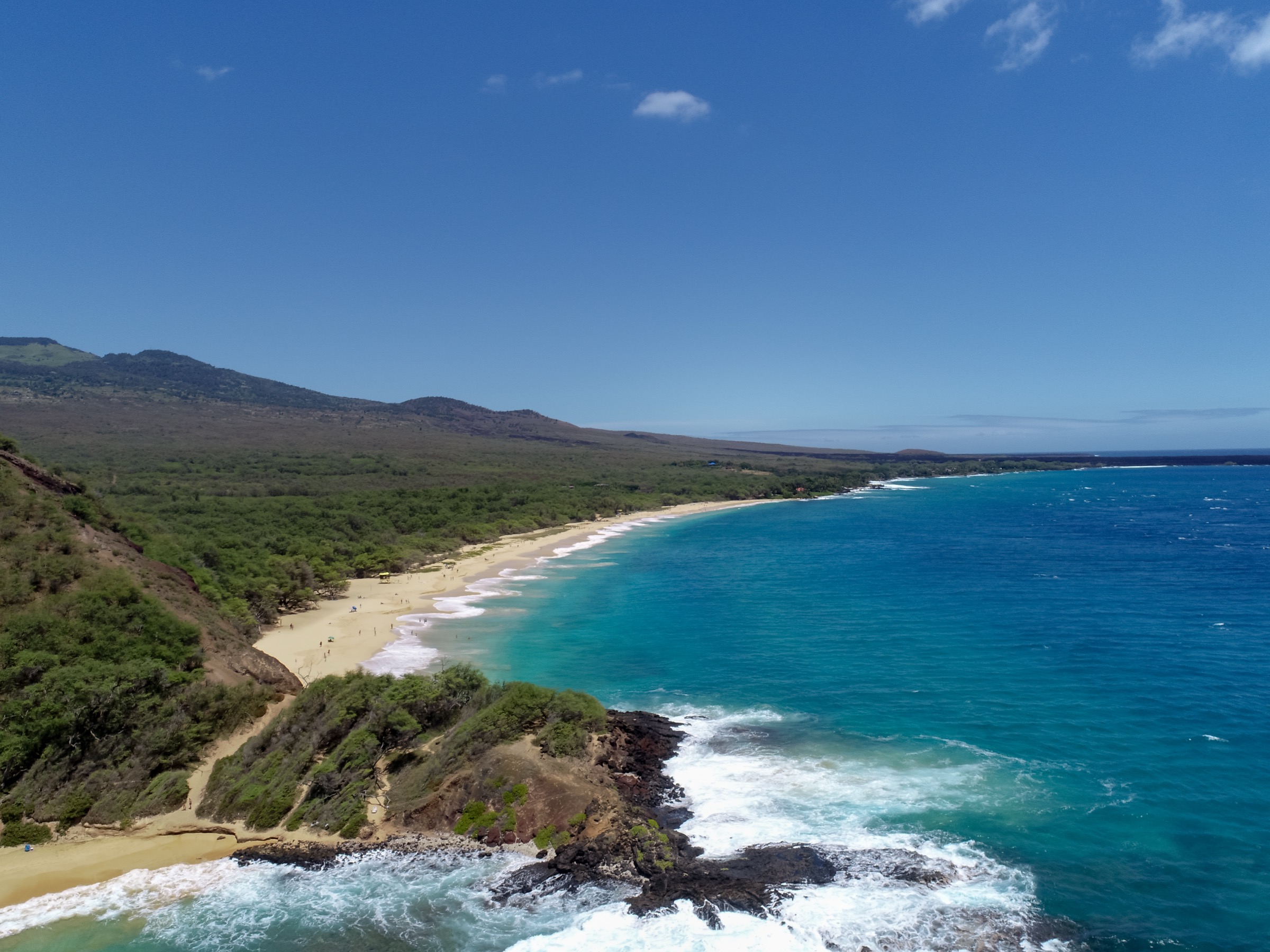
- A large white-sand beach below the Puʻu Olaʻi cinder cone, with lava at the southeast end.
- Known hazards
- DLNR posts a caution that the shore break can be very dangerous.
- Snorkeling
- Not among the activities DLNR lists for this park, which are swimming during calm seas, bodysurfing, board surfing and shore fishing.
Coordinates 20.6309° N, 156.4476° W. Midpoint of the 0.67-mile shoreline the state health department registers as Oneloa Beach (Big Beach). Open on a map
Permanent hazard, not a forecast
The shore break is the hazard here, and wave height does not measure it
The shore break at Big Beach can be very dangerous.
Waves at Big Beach break directly onto a steep sand face in very shallow water. That is what makes the shore break dangerous, and it is a property of the beach rather than of the surf on a given morning.
Wave height does not indicate shore-break safety. A calm-looking morning and a low surf forecast are not an all-clear for waves breaking directly onto the sand.
So watch how the water is breaking rather than how high it is. If waves are collapsing onto the sand instead of rolling in, that is the pattern, and it injures strong swimmers.
The Maui News, checked
Big Beach, Mākena Beach and Oneloa are one beach
Oneloa is the Hawaiian name for the beach. Big Beach is what most visitors say. Mākena Beach gets used for both the beach and the wider area, which is where the confusion starts. All three point to the same broad white-sand shoreline below Puʻu Olaʻi, inside Mākena State Park.
One thing worth knowing if you're searching maps: there are two Oneloa beaches on Maui. The state health department registers this one at 20.63° N, 156.45° W, and a different Oneloa Bay Beach up at Kapalua, about 26 miles north. Check the coordinates, not just the name.
The park also contains Little Beach and Oneʻuli. They have separate approaches, and Little Beach keeps different hours, so treat them as three stops rather than three entrances to one.
Parking and the two fees at Big Beach
Mākena is now a paid-parking park. You can pay at a kiosk when you get there, or prepay online, which is the better option if you'd rather not find out what the kiosk queue looks like on a Saturday. Residents show a Hawaiʻi license or state ID and pay nothing.
The entrance fee and the parking fee are separate charges, which catches people out. A family of four in one car pays $20 in entrance fees plus $10 for the vehicle. Children 3 and under are free. Commercial vehicles pay by capacity instead, from $25 for a small van up to $90 for a coach.
The lots are paved and sit at the signed park entrances. Which entrance you want depends on where you plan to sit, and that is on the driving and parking page.
- Prepay parking online rather than at the kiosk.
- Budget $5 per person on top of the $10 vehicle charge.
- Bring the Hawaiʻi ID if you have one. It covers both charges.
What Big Beach does not have
This is the part most beach listings get wrong. DLNR's own environmental assessment says the park has no permanent restrooms, no running water and no showers. What exists is a row of portable toilets near the entrance.
So there is nowhere to fill a bottle and nowhere to rinse off. Bring everything you plan to drink, and expect a sandy drive home. Shade is scarce on a beach two-thirds of a mile long.
This should change. The Maui Planning Commission approved two comfort stations and two outdoor showers in July 2026, along with an expansion of the parking from 238 stalls to 276. Construction was described as roughly a year out at the time, so check before you count on any of it.
DLNR does not list snorkeling here
The activities DLNR names for this park are swimming during calm seas, bodysurfing, board surfing, shore fishing and beach-related activities. Snorkeling is absent from that list, and given the shore break, that omission reads as deliberate rather than accidental.
If snorkeling is the point of your morning, Maluaka or Mākena Landing are the shore entries people actually use on this coast.
Questions people ask
What are Mākena Beach's hours?
5:00am to 7:00pm daily, extended to 7:45pm in May, June and July. Little Beach, inside the same park, closes at 4:00pm on Saturdays and Sundays.
How much does it cost to go to Big Beach?
Non-residents pay $5.00 per person to enter and $10 per vehicle to park. Hawaiʻi residents are free with a driver's license or state ID, and children 3 and under are free.
Are there bathrooms at Big Beach?
Portable toilets only. DLNR states the park has no permanent restrooms, no running water and no showers. Permanent comfort stations were approved in July 2026 but had not been built as of this review.
Is there drinking water at Mākena State Park?
No. DLNR states there is no drinking water available in the park.
Are there lifeguards at Big Beach?
Yes, two towers. It is the only lifeguarded beach on the Mākena coast. The county does not publish staffed hours, so treat coverage as variable.
Is Big Beach safe for swimming?
It has a shore break that DLNR cautions can be very dangerous, and the injury record backs that up: 33 spinal injuries here between 2009 and 2017, the highest total of any beach in the state. Wave height is not a good guide to it. Watch how the waves break before deciding.
Where do you park at Big Beach?
In the signed Mākena State Park lots at the park entrances. There is more than one entrance, and they serve different stretches of the same beach. Driving and parking covers the approach.
Is Oneloa Beach the same as Big Beach?
On Maui's south side, yes. Oneloa is the Hawaiian name for Big Beach, also called Mākena Beach. A different Oneloa Bay Beach sits at Kapalua, about 26 miles north.
Can you snorkel at Big Beach?
DLNR does not list snorkeling among the park's activities. The shore entries people use on this coast are Maluaka and Mākena Landing.
Sources for this page
- Hawaiʻi DLNR, Division of State Parks: Mākena State Park
- Hawaiʻi DLNR, Division of State Parks: important park notices
- Hawaiʻi DLNR, Division of State Parks: Final Environmental Assessment, Mākena State Park Improvements (December 2022)
- Safe Beach Day, compiled with the Hawaiʻi Lifeguard Association and County of Maui Ocean Safety
This site is independent of Hawaiʻi DLNR, the County of Maui and emergency services.