.jpg)
Six beaches compared
Sources and review dates| Question | Mākena BeachBig Beach | Little BeachPuʻu Olaʻi Beach | Oneʻuli BeachBlack Sand Beach | Maluaka Beach | Mākena LandingMākena Landing Beach Park | Mākena CovePaʻako Cove |
|---|---|---|---|---|---|---|
| Access and cost | ||||||
| Hours | 5:00am to 7:00pm daily. 5:00am to 7:45pm in May, June and July. | 5:00am to 4:00pm Saturday and Sunday. 5:00am to 7:00pm on weekdays. | 5:00am to 7:00pm daily. 5:00am to 7:45pm in May, June and July. | No posted gate hours found. | 7:00am to 8:00pm daily. | No gate and no posted hours found. |
| Entrance fee | $5.00 per person for non-residents. Free for Hawaiʻi residents with a state ID, and for children 3 and under. | $5.00 per person for non-residents. Free for Hawaiʻi residents with a state ID, and for children 3 and under. | $5.00 per person for non-residents. Free for Hawaiʻi residents with a state ID, and for children 3 and under. | None found. | None found. | None found. |
| Parking fee | $10 per vehicle for non-resident non-commercial vehicles. Free for residents with a Hawaiʻi driver's license or state ID. | The state park rate applies, paid at Big Beach. DLNR lists no parking area for Puʻu Olaʻi. | $10 per vehicle for non-resident non-commercial vehicles. Free for residents with a Hawaiʻi driver's license or state ID. | None found. | None found. | None found. |
| Parking | Paved lots at the signed park entrances. Pay at a kiosk on arrival or prepay online. | None of its own. Reached on foot from the north end of Big Beach. | DLNR does not describe a parking area for Oneʻuli. | Three paved areas. The north lot, opposite Keawalaʻi Congregational Church, held about 25 marked stalls and was signed as a public beach right-of-way. Counts date from the county study. | A small paved lot. The county study counted about 20 marked stalls; other accounts say 35 to 40, so treat any single number with caution. | No dedicated lot. Roadside only, where curb signs allow. Hawaiʻi's shoreline access law guarantees transit along the beach, not a parking space. |
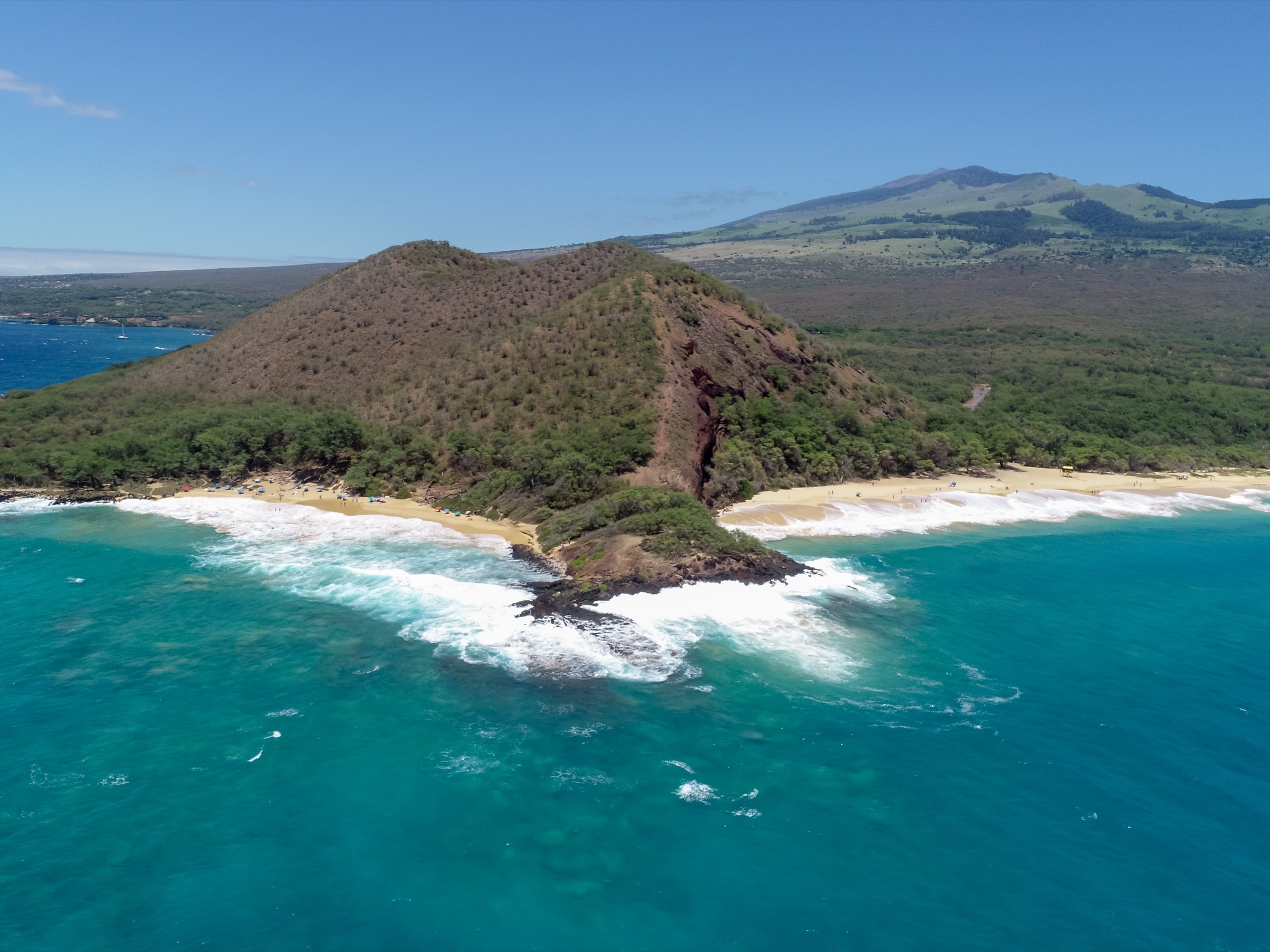
| Shore and entry | A large white-sand beach below the Puʻu Olaʻi cinder cone, with lava at the southeast end. | A sand beach on the north side of Puʻu Olaʻi, reached on foot over the point. DLNR calls the route "the informal access trail connecting Oneloa and Puʻu Olaʻi" and has described it as challenging. It is not a designated state trail, so no official distance or walking time exists. | Dark volcanic sand. DLNR's own hours table names it Oneuli (Black Sand) Beach. | A sand beach south of Wailea. No agency source describes the entry. | A historic landing and ramp beside a short sand beach, used to launch kayaks and small craft. | A small cove framed by lava rock, entered through a gap in the roadside wall. No agency description found. |
| Facilities | ||||||
| Lifeguard | Two towers, the only ones on the Mākena coast. The county publishes no schedule for them; The Maui News reported in 2019 that Maui lifeguards work 8:00am to 4:45pm and that Mākena is guarded year round. | No tower. County of Maui Ocean Safety records lifeguard towers on the Mākena coast only at Mākena State Park. | No tower. County of Maui Ocean Safety records lifeguard towers on the Mākena coast only at Mākena State Park. | No tower. County of Maui Ocean Safety records lifeguard towers on the Mākena coast only at Mākena State Park. | No tower. County of Maui Ocean Safety records lifeguard towers on the Mākena coast only at Mākena State Park. | No tower. County of Maui Ocean Safety records lifeguard towers on the Mākena coast only at Mākena State Park. |
| Restrooms | Portable toilets only. DLNR states the park has no permanent restrooms and no running water or showers. | None. DLNR states the park has no permanent restrooms, and the portable toilets are at the Big Beach entrance. | None. DLNR states the park has no permanent restrooms. | Two comfort stations, one at the north parking lot and one near the south end. | A restroom building inside a walled area, alongside historical interpretive signage. | None found. |
| Showers | None. DLNR states the park has no showers. | None. DLNR states the park has no showers. | None. DLNR states the park has no showers. | Showers beside both comfort stations. | One shower in the walled area beside the restroom. | None found. |
| Drinking water | None. DLNR states there is no drinking water available in the park. | None. DLNR states there is no drinking water available in the park. | None. DLNR states there is no drinking water available in the park. | Not documented by any source we could find. | Not documented by any source we could find. | None found. |
| Water and hazards | ||||||
| Known hazards | DLNR posts a caution that the shore break can be very dangerous. | No lifeguard tower and no road access. The Hawaiʻi Trauma Registry recorded 1 spinal injury here between 2009 and 2017, against 33 at Big Beach. | No lifeguard tower. DLNR's shore-break caution applies to this coast. | No lifeguard tower. No agency hazard posting found for this beach specifically. | A working launch with small-craft traffic, and no lifeguard tower. | No lifeguard tower and no agency hazard posting. |
| Snorkeling | Not among the activities DLNR lists for this park, which are swimming during calm seas, bodysurfing, board surfing and shore fishing. | Not among the activities DLNR lists for this park. | Not among the activities DLNR lists for this park. | Widely used as the shore entry for the reef area called Turtle Town. No agency source rates conditions here. | Used as a shore entry by snorkelers and divers. No agency source rates conditions here. | No agency source rates conditions here. |
How to read the table
Every beach answers the same twelve questions. Where no reliable record answers one, the cell says so rather than guessing. That happens most often at the beaches outside the state park, where ownership, posted hours and parking records are fragmented.
Two patterns show up quickly. Facilities improve as you go north, away from the state park, because the beaches up there have privately maintained comfort stations. Supervision goes the other way: the only lifeguard towers are at Big Beach, which is also the beach with the dangerous shore break.
Where the six beaches actually are
They sit along about three miles of coast, and the order matters more than the distances. Coming south on Mākena Alanui from Wailea you reach Mākena Landing first, then Maluaka, then Mākena Cove, then the state park entrances for Oneʻuli and Big Beach. Little Beach has no road at all: you park at Big Beach and walk over the lava point at its north end.
That ordering is why people end up at the wrong beach. Three of the six are within a mile of each other, the signage names them inconsistently, and two of them have a second name that is more widely used than the official one. If you are navigating by a name someone gave you, check the also-called row before you set off.
Picking one, if you only get one
For a lifeguard and a lot of sand, Big Beach, with the shore break caveat below taken seriously. For snorkelling over reef, Maluaka or Mākena Landing, which sit on the reef people call Turtle Town. For a restroom and a shower, Maluaka. For somewhere quiet, Oneʻuli. For a ten-minute look at a photogenic cove, Mākena Cove.
The one combination that does not exist on this coast is a lifeguarded snorkelling beach with facilities. Big Beach has the lifeguards and no reef, Maluaka has the reef and the facilities and no lifeguard. Knowing that in advance saves a drive.
Questions people ask
Which Mākena beach has a lifeguard?
Only Mākena State Park's main beach, Big Beach, which has two towers. County of Maui Ocean Safety records no towers at Little Beach, Oneʻuli, Maluaka, Mākena Landing or Mākena Cove.
Which Mākena beach has restrooms and showers?
Maluaka has two comfort stations with showers, and Mākena Landing has a restroom and one shower. Mākena State Park has portable toilets only, with no showers and no running water.
Which Mākena beaches charge a fee?
The three inside Mākena State Park: Big Beach, Little Beach and Oneʻuli. Non-residents pay $5.00 per person plus $10 per vehicle. We found no posted fee at Maluaka, Mākena Landing or Mākena Cove.
Which Mākena beach is best for snorkeling?
Maluaka and Mākena Landing are the shore entries people use, and both sit on the reef called Turtle Town. DLNR does not list snorkeling among the activities for Mākena State Park.
Sources for this page
- Hawaiʻi DLNR, Division of State Parks: Mākena State Park
- Hawaiʻi DLNR, Division of State Parks: important park notices
- Hawaiʻi DLNR, Division of State Parks: Final Environmental Assessment, Mākena State Park Improvements (December 2022)
- County of Maui, Department of Parks and Recreation: Commercial Ocean Recreational Activity study (c. 2006)
- Safe Beach Day, compiled with the Hawaiʻi Lifeguard Association and County of Maui Ocean Safety
This site is independent of Hawaiʻi DLNR, the County of Maui and emergency services.