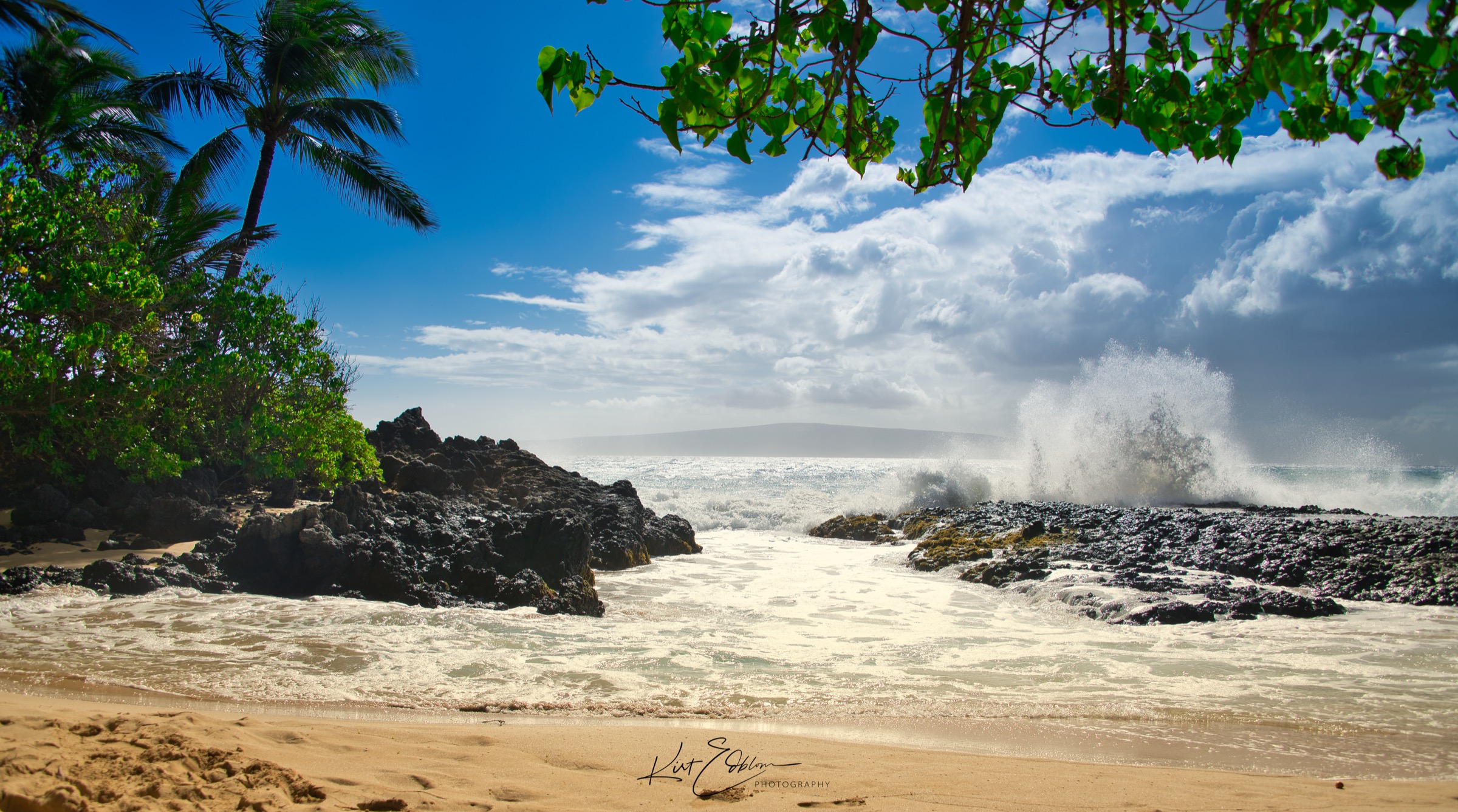
_-_Flickr_-_Kirt_Edblom.jpg)
Mākena Cove facts and facilities
Sources and review dates- Managed by
- No managing agency identified. Mākena Cove is not a state park and does not appear on the County of Maui's beach-park lists. The beach seaward of the shoreline is public under Hawaiʻi law regardless of who owns the land behind it.
- Hours
- No gate and no posted hours found.Not published
- Entrance fee
- None found.Not published
- Parking fee
- None found.Not published
- Parking
- No dedicated lot. Roadside only, where curb signs allow. Hawaiʻi's shoreline access law guarantees transit along the beach, not a parking space.
- Lifeguard
- No tower. County of Maui Ocean Safety records lifeguard towers on the Mākena coast only at Mākena State Park.
- Restrooms
- None found.Not published
- Showers
- None found.Not published
- Drinking water
- None found.Not published
- Shore and entry
- A small cove framed by lava rock, entered through a gap in the roadside wall. No agency description found.Not published
- Known hazards
- No lifeguard tower and no agency hazard posting.
- Snorkeling
- No agency source rates conditions here.Not published
Which secret beach this is
Maui has several beaches that somebody calls secret, which makes the name close to useless for navigation. This one is the small lava-framed cove in Mākena, known as Mākena Cove, Secret Cove, Paʻako Cove and Wedding Beach. If you're following directions from anywhere, check that the source means this cove and not the one near Kapalua or the one at Kalihi.
It's small. A handful of groups fills it, and it fills most reliably at sunrise and in the last hour of light, because that's when the photographers come.
Your right to be there, and what that right doesn't include
Hawaiʻi law is clear on the beach itself. Chapter 115 of the Revised Statutes establishes a right of transit along the shoreline, and DLNR's coastal lands office describes the beach transit corridor seaward of the shoreline as public property. Obstructing access to it is a petty misdemeanor.
What the law does not hand you is a parking space, a path across someone's yard, or a restroom. There's no lot here, so it's roadside parking where curb signs allow it, and the houses along Mākena Road are private. That gap in the wall is the access; the driveway next to it isn't.
Weddings, and the etiquette nobody posts
The Wedding Beach nickname is earned. Ceremonies and photo sessions happen here constantly, and on a cove this size a ceremony effectively occupies the whole beach for its duration.
Commercial activity on Hawaiʻi shorelines is regulated, so if you're planning a ceremony rather than stumbling into one, your photographer or planner should know what permitting applies. If you've arrived for a swim and found a wedding, the graceful move is to come back later. There are better swimming beaches within five minutes' drive, and no better cove for someone's photographs.
Questions people ask
Where is Mākena Cove?
On Mākena Road in South Maui, reached through a gap in the lava-rock wall between private properties. It's also called Paʻako, Secret Cove and Wedding Beach.
Is Mākena Cove public?
The beach is. Hawaiʻi law establishes a right of transit along the shoreline seaward of the vegetation line, regardless of who owns the land behind it. The houses and driveways along the road are private.
Is there parking at Secret Beach?
No lot. Roadside only, where curb signs allow. Shoreline access law guarantees passage along the beach, not a parking space.
Are there bathrooms at Mākena Cove?
No. There are no facilities of any kind, and no lifeguard.
Can you get married at Mākena Cove?
It's a well-known ceremony spot, which is where the Wedding Beach name comes from. Commercial shoreline activity in Hawaiʻi is regulated, so check what permitting applies before planning one.
Sources for this page
- Hawaiʻi Revised Statutes Chapter 115: public access to coastal areas
- Hawaiʻi DLNR, Office of Conservation and Coastal Lands: beach access
- Safe Beach Day, compiled with the Hawaiʻi Lifeguard Association and County of Maui Ocean Safety
This site is independent of Hawaiʻi DLNR, the County of Maui and emergency services.